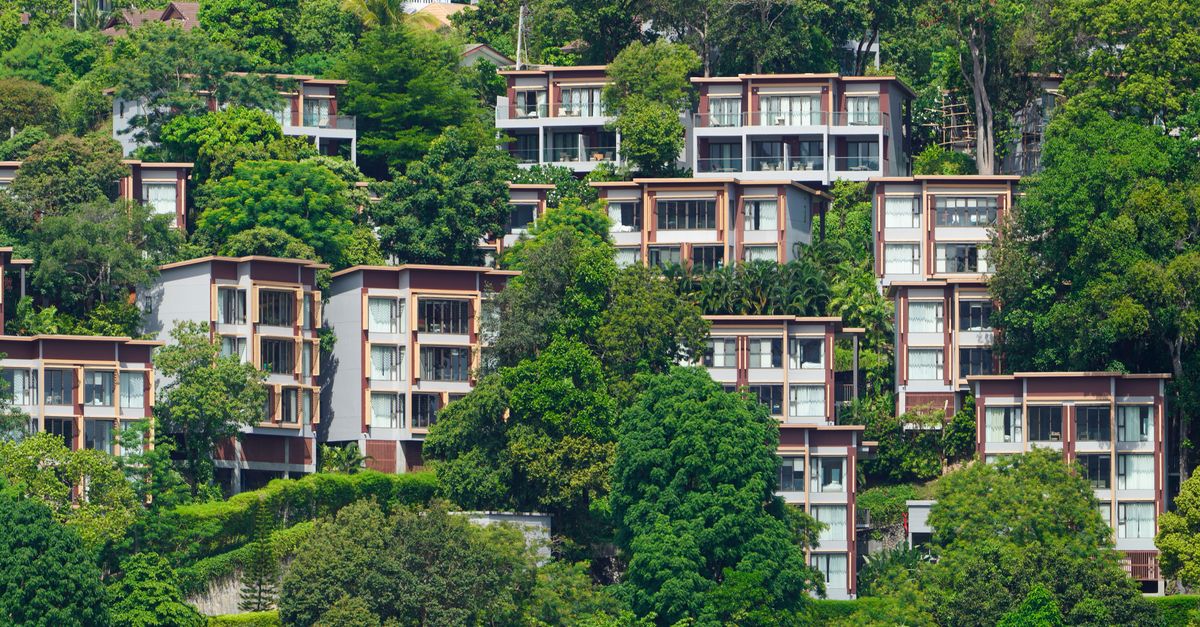
Off-plan property in Phuket means buying from a developer before or during construction — paying in interest-free stages as the building goes up, and often capturing capital appreciation before you even receive the keys. For the right buyer it is one of the most capital-efficient ways into the market, but it carries real risks that completed property does not. This 2026 guide weighs the pros against the risks, sets out a realistic view of returns, flags the "guaranteed returns" trap, and shows you how to vet a developer before you commit a single baht.
What buying off-plan actually means
Off-plan simply means the unit is not finished yet. You are buying from the developer's plans and show unit, and you pay for it in stages over the roughly two-to-three-year build. The sequence looks like this:
- Reserve the unit with a deposit to fix the price and take it off the market.
- Sign the Sale and Purchase Agreement, which sets out the payment schedule and specification.
- Pay in stages as construction reaches agreed milestones.
- Complete and register at the Land Office when the building is finished, using your Foreign Exchange Transaction (FET) form to register foreign freehold.
Because the payments are spread out, off-plan lets you enter with a smaller upfront commitment than buying a finished unit outright. For the overall process and ownership rules, see our pillar guide, how to buy property in Phuket.
The advantages of buying off-plan
Off-plan is popular in Phuket for several concrete reasons:
- Interest-free stage payments across the build, so you spread the cost over two to three years without needing a Thai mortgage.
- Capital appreciation during construction — historically around 15–22% per construction cycle as of 2026 — which off-plan buyers can capture before completion.
- The best choice of units, since you buy early and can pick the view, floor and layout you want.
- Brand-new quality, with modern facilities, current design and a developer warranty.
- A lower entry price than the equivalent finished unit once the project is complete.
What the numbers look like in 2026
Appreciation during the build has moderated but remains meaningful: around 15–22% per construction cycle, down from the 25–35% seen in 2021–23. That normalisation is healthy, and it makes disciplined developer selection more important than chasing the highest headline figure. It is also worth stress-testing your plan against a more conservative number than the historical average, so the purchase still makes sense even if appreciation lands at the lower end of the range.
Once a project completes and you let it, rental yields are in line with the wider market:
- Condos average around 5–6% gross, with one-bedroom units reaching about 6% or a little more.
- Villas typically achieve around 6–8% gross.
- Well-managed short-term rentals can deliver net returns of roughly 6–10%.
Entry points are accessible, too: one-bedroom condos near Bang Tao or Kathu start from around THB 3.5–4.5M, and foreign-freehold income condos can be found from around THB 2–3M in areas such as Rawai and Nai Harn. Our cost of buying property in Phuket and buying a condo in Phuket guides add more detail on the numbers.
The risks you must weigh
Off-plan is not a free lunch, and honest buyers plan for the downside:
- Completion risk — construction can be delayed, and in rare cases a weak developer may fail to deliver.
- Developer risk — an inexperienced or under-capitalised developer is the biggest single danger.
- Specification risk — the finished unit can differ from the renders and the show unit if the contract is loose.
- Market risk — appreciation is a historical pattern, not a promise; cycles vary.
The common thread is that you are committing to something you cannot yet stand inside. That is exactly why the developer, the contract and your lawyer matter so much.
None of this is a reason to avoid off-plan altogether; it is a reason to be selective. Each of these risks can be substantially reduced by choosing an established developer, insisting on a firm contract with penalties for delay, and having an independent lawyer review everything before you pay a stage instalment.
The "guaranteed returns" trap
Many off-plan projects advertise "guaranteed returns" of 6–8%. These can be legitimate, but they are sometimes priced into an inflated purchase price — often 15–25% above market — so the developer is effectively handing back a slice of the premium you overpaid. In that scenario the "return" is really your own capital coming home to you.
A guaranteed return is only as good as the price you pay for it. Always benchmark the purchase price against comparable resale units before you sign — a market price with a realistic yield beats an inflated price with a headline guarantee.
Ask what happens when the guarantee period ends, how the rental scheme is actually operated, and whether you could achieve a similar net yield by letting the unit independently.
How to vet a developer
Choosing the right developer is the heart of a safe off-plan purchase. Work through this checklist with your agent and lawyer:
- Track record — completed projects you can visit, delivered on time and to the promised standard.
- Financial strength and land ownership — confirm the developer owns the land outright and is well capitalised.
- Licences and permits — the required construction and environmental permits are genuinely in place.
- Contract terms — a firm completion date, penalties for delay, a defined specification, and a defects or snagging period after handover.
- Independent legal due diligence — carried out by your lawyer, who reports to you, not by the developer's team.
If a developer is reluctant to share completed references, permits or a clear written contract, treat that reluctance as your answer.
Contracts and payment protection
The contract is where your money is protected, so read it with your lawyer line by line and pay close attention to how payments are structured and safeguarded — the difference between a strong off-plan contract and a weak one is where most of your protection lives:
- Milestone-based payments tied to verified construction stages, not calendar dates alone, so you pay for progress that has actually been made.
- Escrow or staged safeguards where they are available, keeping your funds aligned with real work on site.
- A retention and defects clause, plus a warranty, so issues after handover are the developer's responsibility to fix.
- An FET for each overseas payment, so your foreign freehold can be registered and your capital repatriated cleanly on resale.
- Remote-buyer provisions — video construction updates and a Power of Attorney let you buy and complete from abroad, which is common in Phuket.
You can see current off-plan and completed projects across the island in our catalog, including opportunities in sought-after areas such as Bang Tao and Layan.
Conclusion
Off-plan property in Phuket can be a smart, capital-efficient investment: interest-free instalments, brand-new quality, and appreciation of around 15–22% per cycle as of 2026. The catch is that everything rests on the developer and the contract. Vet the developer rigorously, treat "guaranteed returns" with healthy scepticism, insist on milestone-based payments and independent legal review, and off-plan can reward you well.
Considering an off-plan purchase? Browse our current projects or get in touch for a free consultation, and we will help you separate the strong developers from the risky ones and structure the deal safely.